
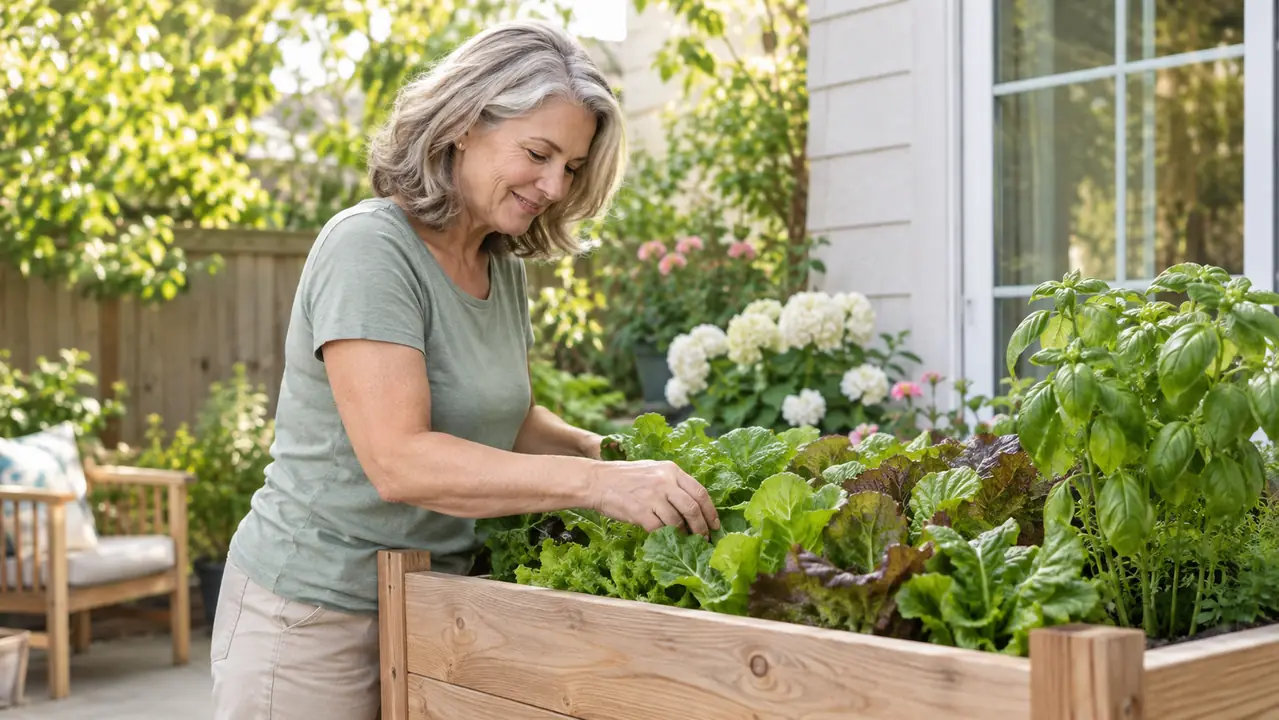
I bought the Best Choice Products raised garden bed in April 2025, and it has sat on the south edge of my concrete patio through two full growing seasons. I am 58, retired from dispatching school buses in Asheboro, and I still garden a 20 by 12 foot plot in red Piedmont clay. My knees ache and my lower back tires from bending. That is the whole reason I bought this bed. Not because I wanted a prettier garden. Because I wanted to pick lettuce without getting down on the ground.
The Best Choice Products bed is 72 inches long, 24 inches wide, and 30 inches tall. It has six legs, a divider panel, drainage holes, and 8.4 cubic feet of growing space. The wood is unfinished Chinese fir. I assembled it myself on one Saturday in about two hours with a screwdriver. Roy, my husband, helped me lift it onto the patio once it was together, and he has not touched it since. That is the arrangement in our house. He lifts, I plant.
The Quick Verdict
Two seasons in, the 30 inch height and the drainage holes have earned their keep. The unfinished wood has gone gray and the shallow trough dries fast in July, but I still use it every week.
Amazon Check Today's Price →The bed I would buy again for a sore back and a small patio
It stands 30 inches tall, so you tend it from your feet. Check the current listing for the 72 by 24 by 30 inch model with the divider panel and six legs.
Amazon Check Today's Price on Amazon →How I've Used It
I put it on the south edge of the patio, not out in the plot. That was deliberate. The patio is concrete and level, and the bed sits close to the one outdoor spigot on the back wall. I filled it with six 1.5 cubic foot bags of bagged raised bed mix. I did not dig up clay from the plot or mix in anything from the old garden. I wanted a clean start in a clean box.
The first planting was leaf lettuce, spinach, radishes, green onions, bush beans, basil, and parsley. Those are the crops I pick a little at a time, often with a supper plate in one hand. Tomatoes stayed in the plot. They always stay in the plot. I have six tomato plants in the ground, Better Boy and Cherokee Purple, plus bell peppers, squash, and pole beans. The raised bed is for the small things I want within arm's reach.
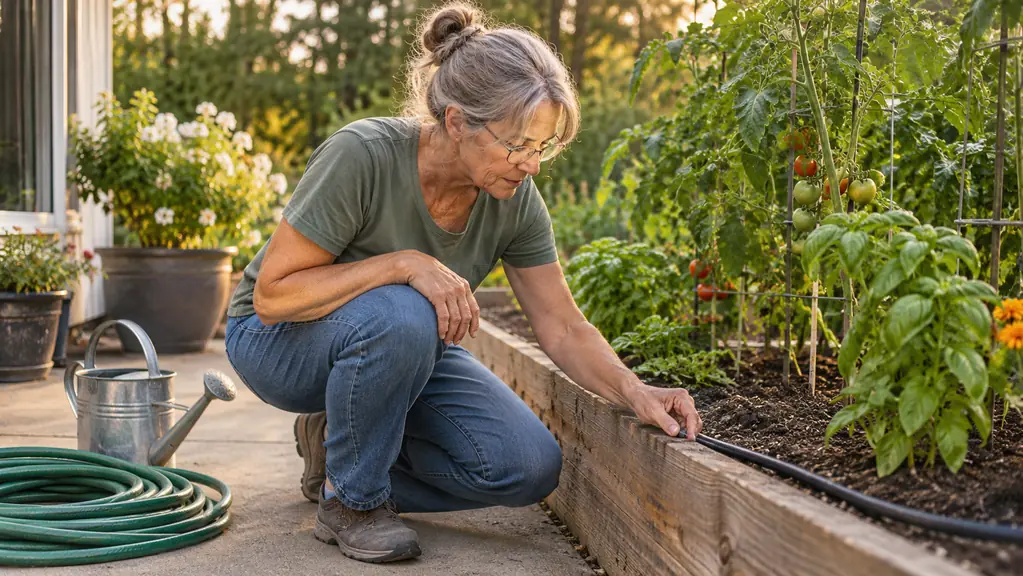
Watering is by hand at the spigot. I run a MIXC drip kit, 1/4 inch tubing and 16 adjustable nozzles. Six nozzles are on the raised bed and ten are in the plot. I turn the water on every morning in summer for about 25 minutes and turn it off. The kit has no timer, no battery, and no app. I have never added one. The line runs to the bed because the trough dries fast in July, not because I planned it that way from the start.
Feeding is simple. Espoma Tomato-tone goes on the tomatoes and peppers in the plot. The bush beans in the raised bed get a light feeding of it, and that is all. I use the Nisaku hori hori for digging, weeding, transplanting, cutting twine, and opening bags. The bed itself asks for very little beyond water and a look every morning.
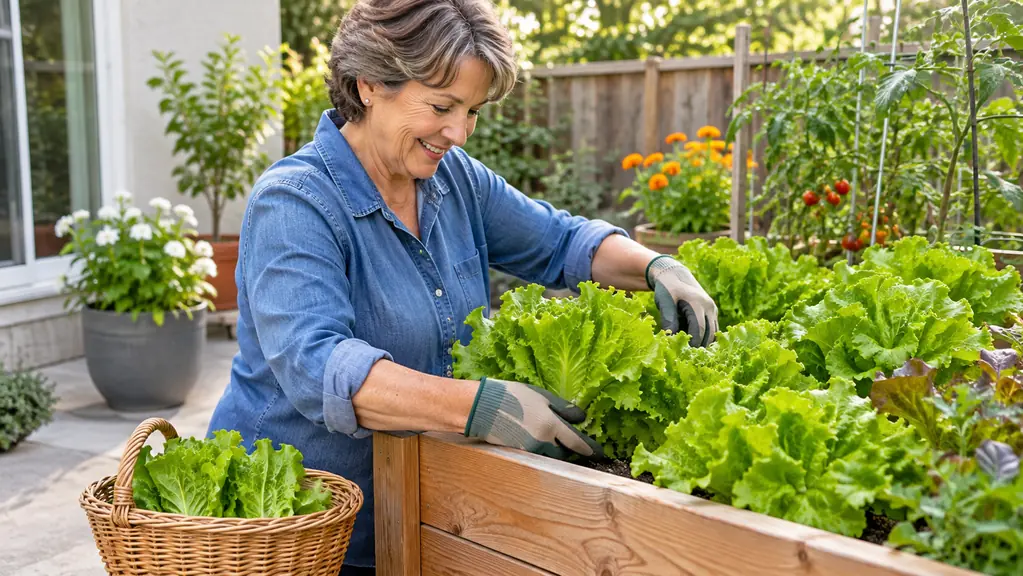
Most mornings I walk out with a cup of coffee and look at the bed before I do anything else. I pick what is ready, pull a weed or two, and check the moisture with my fingers. In the plot I need to plan a whole session: kneeler, tools, twine, the long hose for washing up. At the bed I just stand there. That difference is small on paper and large in practice. The bed gets tended because it is easy to tend.
What Two Seasons Did to the Wood
The wood is unfinished Chinese fir. I left it that way. By the second summer it had gone gray, which is what unfinished wood does in North Carolina heat and humidity. I have not treated it, covered it, or painted it. It stays on the patio all year, and in winter it sits empty of crops. I have not seen a sag or a warp in the frame. The six legs sit flat on the concrete and the bed does not wobble when I lean on it.
I assembled it in about two hours with a screwdriver. The box included an assembly guide. I did it on a Saturday before Roy helped me lift the finished frame onto the patio. The bed weighs 37.5 pounds before it is filled. After it is filled with mix, it stays where you put it. I would not plan to drag it around the yard.
The divider panel is more useful than I expected. I use one side for basil and parsley and the other for lettuce or radishes. It keeps the basil from running into the parsley, and it gives me a clean line when I am direct sowing small seed. The drainage holes have done their job. I have not had standing water in the bed, even after a hard summer rain.
I have not sanded it or oiled it. The top edge has weathered the same as the sides. There is no cracked leg and no loose screw that I have found. I check the frame once a season with the same screwdriver I used to assemble it. If something loosens, I tighten it. That is the whole maintenance routine. The bed is not furniture. It is a box that holds mix and plants, and it has held both without fuss.
The Shallow Trough and the July Dry Spell
Here is the one complaint I have, and it is real. The growing space is 8.4 cubic feet across a 72 by 24 inch box. That is not a deep reservoir of moisture like my in-ground plot. In July, the top of the mix dries fast. The lettuce and spinach feel it first. The drip line runs to the bed because of this. I do not think I would keep leafy crops going in it through a hot dry spell without a line on it.
Doreen, two doors down, waters her garden with a soaker hose. I have watched her set it and I understand why she likes it. I already had the MIXC kit for the plot, so I ran a branch to the bed and used six of the nozzles there. That is the whole fix. It is not automatic. I still turn the spigot on by hand every morning. But the bed is not a set-and-forget container. You have to watch it in heat.
I learned to water in the morning, not at noon. If I water at noon in July, the top dries before supper and the lettuce looks tired. The morning run gives the plants a chance before the heat comes. I have not added a timer because I want to see the bed when I turn the water on. That sounds sentimental, but it is also how I catch a dry corner or a leaning stem.
What Grew and What I'd Plant Again
The leaf lettuce gave me more than one cutting. The spinach came fast and went fast, which is normal here. The radishes were ready before the beans had climbed. The green onions stayed useful for weeks. The bush beans were the surprise. I fed them light with Tomato-tone and they kept coming. The basil got tall and the parsley came back strong after a cut. None of that is a yield record. I do not weigh harvests. I just know what filled the supper plate.
I did not grow tomatoes in the raised bed. I would not. The bed is 24 inches wide, and my Better Boy and Cherokee Purple plants need more room than that. They stay in the 20 by 12 plot where they have always been. The raised bed is for small crops, herbs, and greens. If you want one bed to do everything, this is not that bed. It is a good bed for a narrow list of jobs.
The parsley and basil are the two I use most. I cut basil at the top and it fills out. The parsley I cut hard once and it came back. The green onions I pull as I need them. The radishes are a short crop, so I sow a small patch, pick them, and sow again. The bed is small enough that I can keep up with it. In the plot, the squash and beans can get away from me in a wet week. The raised bed does not get away from me.
The Back and Knees Question
At 30 inches tall, I stand to plant, weed, and pick at this bed. I do not kneel at it. My right knee is worse than the left, and both get stiff if I spend too long on the ground. Standing at the bed means I can work for 20 minutes and walk away without pushing myself up off the concrete. That is the benefit I was after, and it held through two seasons.
I still kneel in the plot. That is where the TomCare kneeler comes in. I flip it pad side up to kneel and use the frame as handles to push back up. For low beans and squash I flip it to the seat and pick from the bench. The raised bed did not replace the plot. It moved the small crops up to my hands. Roy has never gardened. He helped lift the bed and that was the end of his involvement.
The TomCare lives folded in the shed when I am not in the plot. The raised bed does not need it. That is not a small thing for me. I used to dread the first week of kneeling in the plot because my knees would ache for two days. I still kneel, but I do it for the crops that need the ground, not for a handful of lettuce. The bed split the work into standing work and kneeling work.
What I'd Change and What I Would Not
I would not change the height, the six legs, the divider panel, or the drainage holes. I would plan the drip line from day one instead of waiting for the first dry July. I would still leave the wood unfinished, because I do not want to maintain a finish on a vegetable bed. The gray does not bother me. If you want a furniture look on your patio, this is not that. It is a working bed.
The 300 pound capacity is on the listing. I have not tested it and I do not plan to. I do not sit on the edge or lean my full weight on one side. I treat it as a planter, not a bench. I also would not call it portable once it is filled. The bed is 72 inches long and 24 inches wide, and it has a real footprint on a patio. Measure your space before you order.
If I were starting over, I would put the bed in the same spot. South edge of the patio, close to the spigot, out of the main walk. I would fill it with the same bagged mix. I would run the drip line the same week I planted. I would not wait for a dry July to teach me. I would also measure the patio first. The bed is 72 inches long and 24 inches wide, and it needs a level spot. A slope would make the legs work harder than they should.
What I Liked
- 30 inch height means I stand to tend lettuce, basil, and beans
- 8.4 cubic feet and a divider panel make small crops easy to separate
- Drainage holes and six legs have kept the bed stable on concrete through two seasons
- Assembled in about two hours with a screwdriver
Where It Falls Short
- Unfinished fir went gray by the second summer
- The shallow growing space dries fast in July heat
- Needs a helper to lift the assembled frame onto a patio
- Not the bed for tomatoes or deep-rooted crops in my climate
The height is the whole point. I have not knelt at this bed once in two seasons, and the lettuce still came up.
Who This Is For
This is for someone with sore knees or a back that tires from bending, a patio or level spot, and a short list of small crops. The Best Choice Products bed fits lettuce, spinach, radishes, green onions, bush beans, basil, and parsley within arm's reach. It fits a gardener who wants to stand while picking and who will still keep a larger plot for tomatoes and squash. It also fits a household with one person who gardens and one person who will help lift a frame exactly once. If that sounds like your yard, this bed earns its place.
Who Should Skip It
Skip it if you want tomatoes, corn, potatoes, or anything with a deep root run. My tomatoes stay in the 20 by 12 plot, and they will stay there. Skip it if you will not commit to watering in July. The bed dries fast, and the drip line is not optional in my yard. Skip it if you want a furniture-grade finish out of the box. The fir is unfinished and it will gray. Skip it if you need to move the bed around after filling. It is a floor-standing planter, not a wagon.
If your knees have opinions about the ground, start here
The 72 by 24 by 30 inch Best Choice Products bed is the one I bought in April 2025 and still use. Check the current price and the divider panel in the listing.
Amazon Check Today's Price on Amazon →