
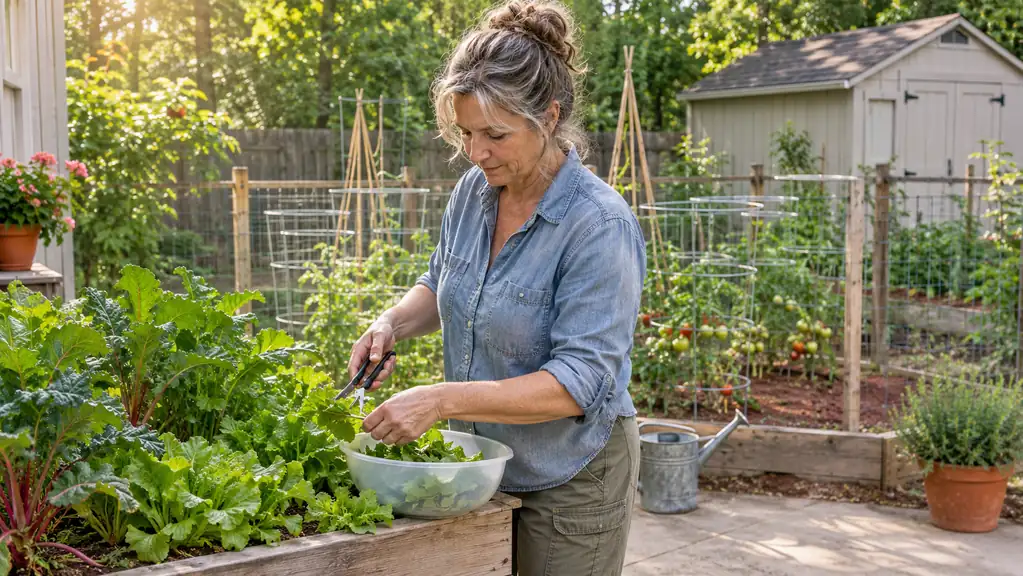
Short answer, since you probably want one. If the question is which one grows better vegetables, my in-ground plot wins. It has won every year since 2015 and it won again this summer. Tomatoes, peppers and squash get deeper, cooler roots in that red Piedmont clay, and they produce accordingly. If the question is which one is easier to keep up with at 58 with two sore knees, the Best Choice Products raised bed wins and it is not close. I stand at it. I do not bend over it. That is the whole trade, and the rest of this is just the details of that trade.
I bought that raised bed in April 2025. It came in a box, I assembled it myself on one Saturday in about two hours with a screwdriver, and Roy helped me lift it onto the patio once it was together. Then I poured in six 1.5 cubic foot bags of bagged raised bed mix and planted the same weekend. Two full seasons later, plus a winter sitting empty, it is still on the south edge of that patio. The in-ground plot is 20 by 12 feet of red clay and it has been running since 2015. I did not replace one with the other. I run both, every year, and after two seasons of that I can tell you where each one earns its keep.
| Best Choice Products Raised Bed | My In-Ground Plot | |
|---|---|---|
| Top crops | Leaf lettuce, spinach, radishes, green onions, basil, parsley. Small quick things you pick often. | Tomatoes, peppers, squash, pole beans. Big rooted things that want depth and room. |
| Back and knees | 30 inches tall, so I stand to plant, weed and pick. No bending at all. | Ground level. I kneel on the TomCare or I pay for it in my lower back that evening. |
| Soil | Six 1.5 cubic foot bags of raised bed mix, bought and poured in. Light, loose, no rocks. | Red clay. Heavy, holds water, and roots have to work for it. Free, though, and it has been here all along. |
| Space needed | 72 by 24 inches of patio. It does not care what is under it. | 20 by 12 feet of yard. That yard could be grass or a shed or nothing. |
| Watering | The shallow trough dries out fast in July. Six drip nozzles run to it every morning. | Holds moisture longer in that clay, but still gets ten drip nozzles for the same 25 minutes. |
| Critters | 30 inches up on six legs. Rabbits and ground rodents have not touched it. | Fenced but open to everything that digs, crawls or hops a low wire. |
| Effort to start | Two hours to assemble, one afternoon to fill. Then nothing structural for two seasons. | Eleven years of amending, turning and pulling weeds out of clay that never fully gives in. |
| Weathering | Unfinished fir. It went gray by the second summer. Still solid, one soft spot of complaint noted below. | Soil does not go anywhere. It just gets worse or better depending on what you put in it. |
| Years of use | Two full seasons. Fir will not outlive a cedar bed, and I expect to replace panels eventually. | Eleven seasons and counting, and it will outlast me with no repairs. |
Where Best Choice Products Wins
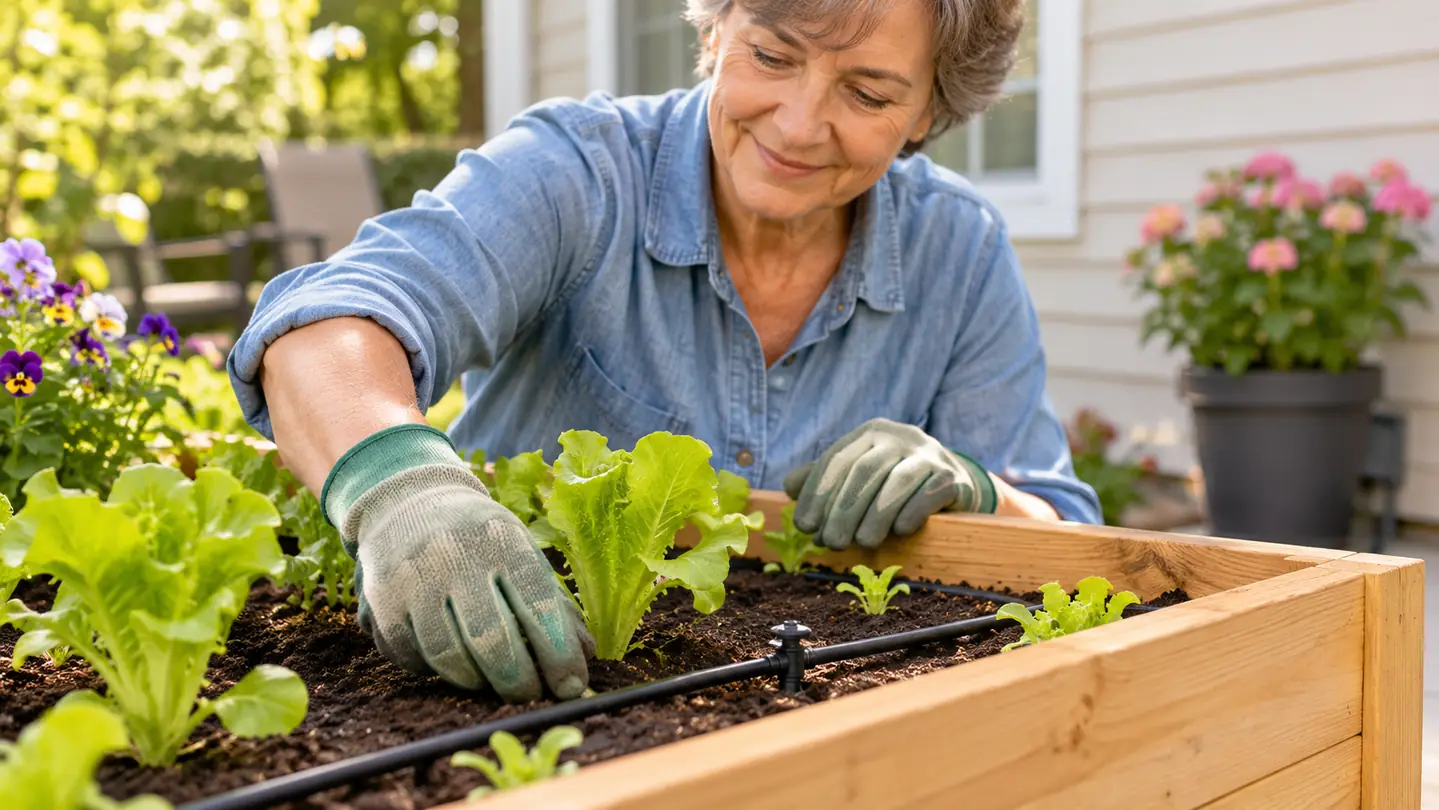
The height is the entire argument, and I do not want to undersell it. Thirty inches puts the soil surface at my hip. I plant leaf lettuce standing up. I pull a radish standing up. I cut basil with the kitchen scissors into a plastic bowl and never once put a hand to the ground. My right knee is the bad one, and there were July mornings in past years where I looked at the bean rows in the plot and went back inside instead. That has not happened with the bed. Whatever else I say about it, I use it more than I would use a second in-ground patch of the same size, because the cost of starting is almost nothing.
The second thing it wins is space, and this surprised me more than it should have. The bed is 72 by 24 inches and sits on the patio slab, so it does not compete with the yard for anything. You can put one on a balcony, a concrete pad or a strip of gravel and it works the same way. My plot is 20 by 12 feet of ground I cannot use for anything else. The bed asked for a rectangle of patio I was not using and had not used since we poured it. Third thing it wins is critters. Thirty inches up on six legs means rabbits are not getting in it, and neither is anything that roots around at ground level. The plot is fenced and I still find tunnels in it every spring. In two seasons I have not found one in the bed.
Assembly is worth a word because it is the part people worry about. The Best Choice Products bed is a box of fir panels, six legs, a divider panel and a bag of hardware, and the instructions are pictures. I did it alone on the patio in about two hours with a screwdriver, and the only part I needed Roy for was lifting the finished thing into place, because 37.5 pounds of awkward is a different job from 37.5 pounds of heavy. The divider panel splits the 72 inches into two sections and I use it: lettuce and spinach on one side, radishes and green onions on the other, so I am not walking the length of it to pick a salad. The drainage holes are already in the bottom, and I have never had standing water in that box.
There is a fourth win that matters if you are short on patience, and a fifth that matters if you are short on weekends. I filled the bed with six bags of mix and planted the same weekend. No amending, no waiting on a soil test, no breaking up clay clods with the hori hori before anything can go in the ground. You buy soil, you pour soil, you plant. And once it is set, the upkeep is small. I top the soil back up a little each spring, pull the few weeds that blow in, and that is the whole job. Eleven years into the plot and I am still fighting that clay every single spring.
The bed that let me garden standing up, two seasons in
Thirty inches of soil at hip height, 8.4 cubic feet of growing space, six legs and a divider panel. I assembled mine in about two hours with a screwdriver. Check today's price on Amazon and look at the listing photos for the assembled size before you pick your spot.
Amazon Check Today's Price on Amazon →I plant lettuce standing up. I pull a radish standing up. I cut basil with the scissors and never once put a hand to the ground. That has not happened in the plot since 2023.
Where the In-Ground Plot Wins
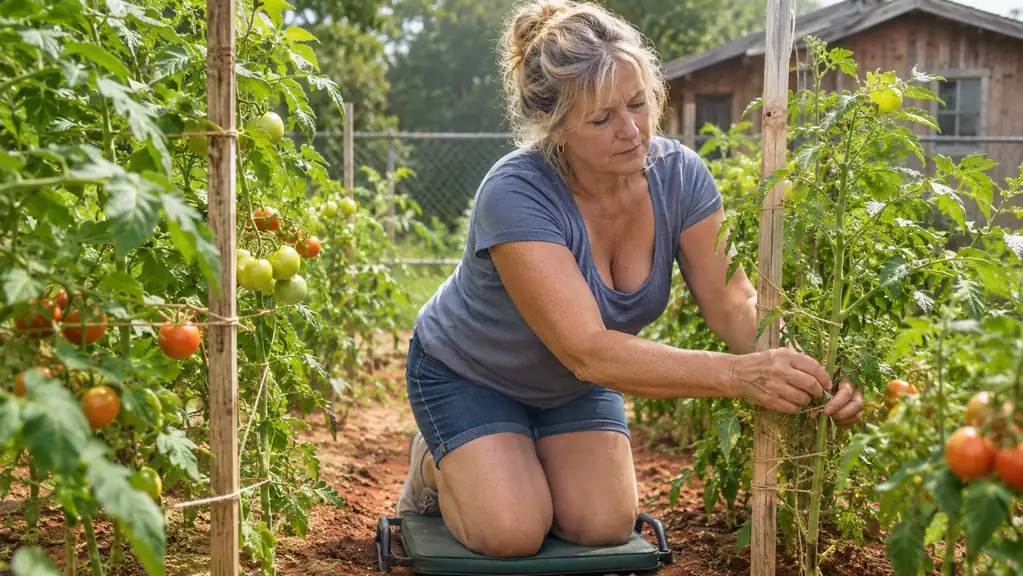
Now the part the raised bed people leave out. Leaf lettuce and radishes in a shallow trough of soil on a concrete slab are fine. Tomatoes in it are not, which is why I have never grown a tomato in the raised bed. The bed holds 8.4 cubic feet. That is a lot of lettuce and honestly not much else. Big fruiting plants want a deep, cool, generous root run, and the plot has twenty feet of it in every direction and stays cooler down where the roots actually go. My Better Boy and Cherokee Purple came through two of the hottest Julys I can remember. I do not believe they would have done it in a box on a slab.
The plot also wins on water. That red clay gets a bad reputation and it deserves some of it, but it holds moisture in a way a shallow box on a hot slab cannot. In the worst of July the raised bed wants its six drip nozzles every single morning or the surface is dust by two in the afternoon. The plot gets its ten and could honestly skip a day without anybody suffering. Every summer I think about that, and every summer I am glad I did not tear the plot up. And it wins on the long haul. Eleven seasons, no repairs, no panels to replace, nothing to reassemble. The bed is unfinished Chinese fir and it went gray by the second summer, which I do not mind at all, but I am not going to sit here and tell you fir is cedar. Somewhere down the road I will be replacing a board and I already know it.
Feeding is the other place the plot is simply easier. The tomatoes and peppers in the ground get Espoma Tomato-tone, the granular 3-4-6 with the calcium in it, every two weeks through the season per the bag. I started that in late April 2025 at planting and I have kept to it. The raised bed crops get a light feeding of the same on the bush beans only, because lettuce and radishes do not want much and I would rather underfeed them than push a lot of leaf. And the digging: that clay is where the hori hori earns its keep. A stamped steel trowel bent its neck in it back in 2024. The Nisaku goes in, levers, and comes out with a plug of clay on the blade, and the inch markings on it are how I set seed spacing without carrying a ruler out there.
What the Two Years Actually Changed
I went into this thinking the raised bed would slowly take over. That is not what happened. What happened is that my garden split itself into a standing garden and a kneeling garden, and both halves got better. The bed absorbed the small, frequent, pick a handful crops: leaf lettuce, spinach, radishes, green onions, bush beans, basil, parsley. Those are the things I graze on all season, two or three times a week, and doing that at hip height instead of on my knees is the difference between grazing and skipping it. The plot kept the big, heavy, once a week harvest that is worth kneeling for.
The tools split the same way. The MIXC drip kit runs 100 feet of quarter inch tubing and 16 adjustable nozzles off the one spigot on the back wall, six nozzles to the bed and ten to the plot. I turn it on by hand every morning in summer for about 25 minutes and turn it off. No timer, and I have never wanted one. Before that I dragged a 50 foot hose around every evening and talked myself out of it on the nights I was tired. The TomCare kneeler lives by the plot, not by the bed, because the bed does not need it. Pad up to kneel, flipped over to sit on the bench when I am picking low beans and squash. The hori hori does the digging in both, because clay is clay and that stainless blade goes through it where a stamped trowel bent.
A July morning, since that is the honest test of any of this. I am out the back door at seven with the scissors, spigot on as I pass it, and by the time I have cut a bowl of lettuce and pulled six radishes for lunch the bed is watered and I have not knelt once. Then I walk to the plot, flip the kneeler to the pad side, and do the real work. Tie up tomatoes, pinch suckers, cut the squash, check the beans. Twenty minutes on my knees, and the kneeler is the reason that twenty minutes is possible at all. Then I turn the spigot off on my way in, about 25 minutes after I turned it on. Two seasons of that and I know exactly what it costs me, which is a good deal less than it used to.
Winter is the other thing I did not expect. The bed sits out there empty from November to April and looks like a piece of furniture nobody is using. I drain the drip kit, coil the whole 100 feet into the shed, and lay it back out the first week of April. Last frost here is around mid-April, so the bed gets planted a little ahead of the plot, lettuce and radishes going in first, and I am eating off it before the tomatoes in the ground have set fruit. That is a real advantage and it is one I did not think about when I bought it. The one complaint I will put my name to is that shallow trough drying out fast in July. It is not a defect. It is what a box of soil on a hot slab does. If you buy one and you live anywhere with a real summer, plan your watering before you plan your plants.
Who Should Buy Which
If your back, your knees or your hips are the reason you stopped gardening, buy the Best Choice Products bed and do not think twice about it. If you have a patio, a balcony or a slab of concrete and no yard, buy it, because you have no other option and it is a good one. If you want lettuce and herbs within reach of the kitchen door and you want them without changing clothes or hunting for the kneeling pad, buy it. Anybody gardening on clay with sore joints should own one of these.
If you want a real tomato harvest, keep your in-ground plot and keep improving it. If you have good ground, space, and a back that still tolerates kneeling, the plot beats the box for anything with a big root system and it beats it for free. If you are choosing between the two and you can only have one, and what you actually want is a slicer in August, put the effort into the ground. The bed is a fine second garden. It is a poor first one if tomatoes are the point.
Doreen, two doors down, waters everything with soaker hoses and thinks I am odd for standing at a spigot every morning turning it by hand. She is not wrong about the odd part. But she is also not trying to grow a tomato in August, and I am, which is why I keep both a plot and a box and a hundred feet of tubing running between them. Me, I would buy the bed again in April without hesitating. It did not make my garden bigger. It made the part of my garden I use every day something I can do standing up, and at 58 with a right knee that complains, that turned out to be the part that mattered.
If your knees have been deciding your garden lately
72 by 24 by 30 inches, six legs, a divider panel, drainage holes, 300 pound capacity, 37.5 pounds shipped. Two seasons on mine and the wood is gray but solid. See today's listing for the current price and the exact footprint before you measure your patio.
Amazon Check Today's Price on Amazon →