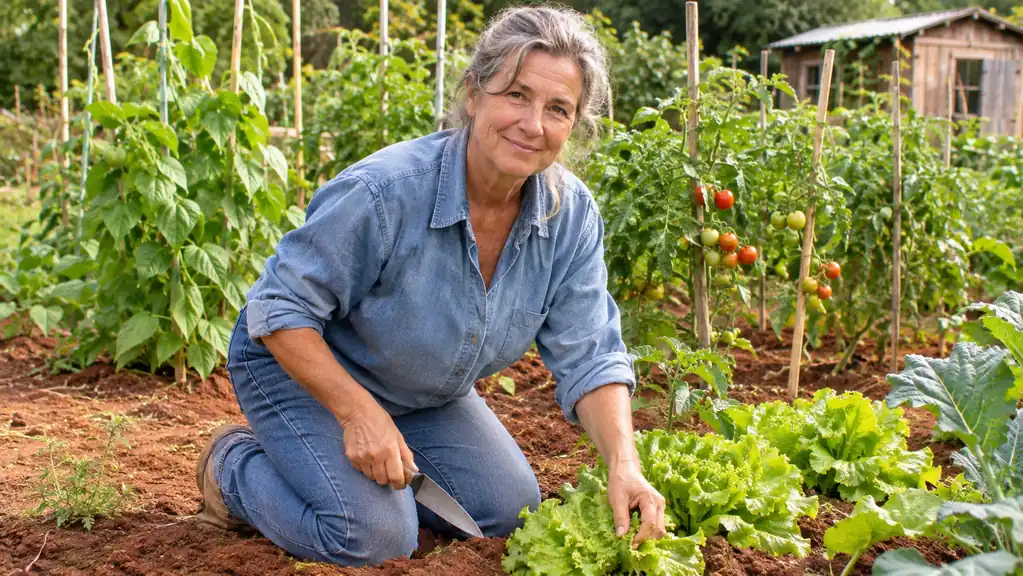
Ten years ago I owned a trowel, a dandelion fork, and an old kitchen knife I kept in my back pocket for cutting twine. That was the whole kit. In 2024 the trowel's neck bent in the red clay of my in-ground plot and stayed bent, and I gardened around it for a year before I did anything about it. In June of 2025 I bought the Nisaku NJP650 hori hori, the last of five garden purchases that year and the easiest of the five to justify to my husband Roy. Two full seasons later it is the tool I reach for first and the only one of the three originals I still use.
Here is what a hori hori is, if you have not held one: a Japanese digging knife, made in Japan, stainless steel, a 7.25 inch blade with one serrated edge and one straight edge, inch markings down the blade, a 5.25 inch wood handle, and a faux leather sheath to hang it in. Ten ounces. That is the whole description, and it covers about nine tenths of the work in my 20 by 12 foot plot and my one raised bed on the patio.
The tool that outlasted the trowel it replaced
The Nisaku NJP650 is a stainless steel digging knife with a 7.25 inch blade, a wood handle and a faux leather sheath. It goes on my belt in the garden and on the peg rack after.
Amazon Check Today's Price on Amazon →Ten Reasons, In Rough Order
It digs Piedmont clay without folding up
My old trowel had a stamped steel neck. In the summer of 2024 I leaned on it in the in-ground plot, the clay was dry and hard, and the neck bent. It stayed bent. I dug around it for a year because I am stubborn. The Nisaku blade is stainless steel, 7.25 inches, and it goes into that same clay without complaint. I have not been gentle with it. Two seasons of tomatoes, peppers, squash and pole beans in that plot, and the blade is still straight.
The inch markings take the guessing out of planting depth
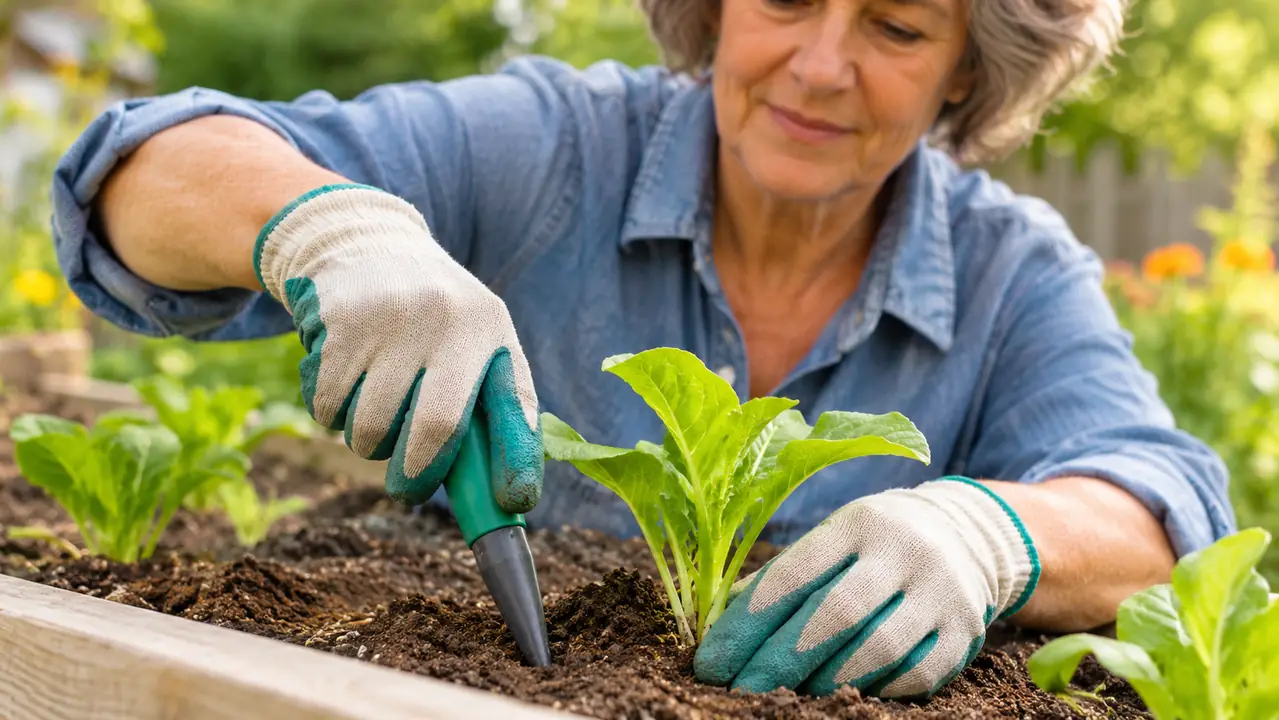
There are inch markings on the blade. I sow radishes, green onions and leaf lettuce in the raised bed, and the packet always gives a depth, and I used to guess at it with my thumb. Now I push the blade in to the mark, pull it out, and drop the seed in the trench. Same for basil and parsley. It is a small thing I did not expect to use, and I use it every single time I sow anything.
One edge is serrated, so twine and bags open in a pull
The serrated edge is the half I underestimated. I cut twine for the pole beans with it. I open bags of raised bed mix with it. I slice through the roots of anything I am pulling out. Before the Nisaku I kept an old kitchen knife in my back pocket for twine, and it went into the shed bucket in June of 2025 and has not come back out. One tool instead of two, and the one tool is on my belt where I can find it.
It weeds a row without tearing up what is beside it
A dandelion fork has its place, but the prongs catch roots and heave up more soil than I want. The narrow blade goes down beside a green onion and comes back up with the weed and not much else. I work down a row of bush beans in the raised bed and the bean stems stay right where they are. That narrow profile is the whole reason. My dandelion fork went unused after the first month, and it is still in the shed because I cannot bring myself to throw it out.
Setting out a pepper seedling takes one motion
I set peppers into the plot in early May, after the last frost around mid-April has passed and the ground has warmed. The hori hori goes straight down, comes back, and the hole is deep enough for the root ball without me scooping at it with a trowel. Twenty plants in a row and my back is not screaming at me. Roy does not garden, so this is all mine to do, and anything that shortens the bending part of a morning is worth having.
The wood handle stays put in a sweaty glove
The handle is wood, 5.25 inches, and the listing calls it ergonomic, which is the kind of word that usually means nothing. What I can tell you is that in July in Asheboro my gloves are wet by nine in the morning and the handle does not turn in my hand. It has not split or gone loose. I wipe it with a rag and hang it up. That is the whole routine for the handle. The blade gets one pass with a file, and I will get to that.
I can work the raised bed standing up
My knees are sore and stiff, the right one worse, and my lower back tires from bending. The raised bed on the patio sits at 30 inches, so I stand at it. The hori hori reaches down into that bed because I am not limited to arm's length the way I am with a stubby trowel. Lettuce, spinach, radishes, green onions, bush beans, basil and parsley all come out of that bed, and I do nearly all of it on my feet.
It hangs on the peg rack, so it is where I left it
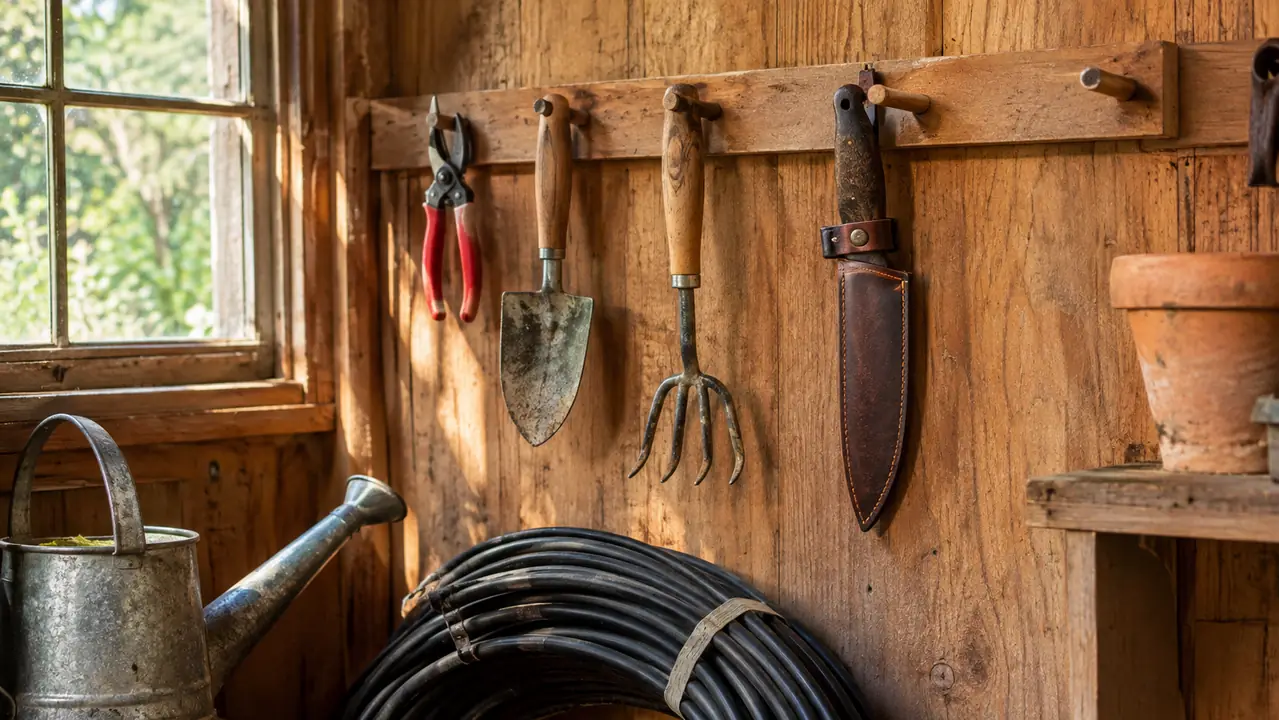
The sheath is faux leather and it has a loop for a belt. In the garden it is on my belt. Out of the garden it hangs on a peg in the shed by the back fence, and that shed is 8 by 10 with a peg rack Roy put up, so the tool is not lost at the bottom of a bucket with eleven other things. I cannot tell you how many mornings I used to spend hunting a trowel. I have not spent one since June of 2025.
Ten ounces, and it works in either hand
The whole knife weighs 10 ounces, 300 grams on the listing. I carry it all morning without noticing it. It is ambidextrous, which matters more than I expected, because I reach for it with whichever hand is free while the other one is holding a seedling. It is not a heavy tool and it is not a delicate one. Roy picked it up once, turned it over, said it felt like a real tool, handed it back and went inside.
Two seasons in, one pass with a file
I ran a file along the straight edge once, in the spring of 2026, and that is the only upkeep the blade has needed. No cuts, no injury, no loose handle. The sheath is scuffed and the wood has darkened. It carries a two year manufacturer warranty, which I have not had to use. What I care about is that it did the same job in the second season that it did in the first, in the same clay that bent a trowel.
What I'd Skip
I would skip the second hori hori. You do not need one for the shed and one for the belt, because the sheath means the one you own travels with you anyway. I would also skip anything that claims a hori hori replaces a shovel. It is a knife, not a digging bar. When I turn the whole 20 by 12 plot in the spring, I use a spade, and no knife is going to change that. And I would skip the cheap version with the plastic handle if you garden in clay, because I bought cheap once and I know exactly how that ends.
The trowel's neck bent in the clay in 2024 and stayed bent. The Nisaku has been in that same clay for two seasons and is still straight.
Two seasons in the Piedmont clay, and it is still the first tool I pick up
The NJP650 is made in Japan. Stainless steel blade, 7.25 inches, with one serrated edge and one straight edge, inch markings, a 5.25 inch wood handle, and a faux leather sheath. Ten ounces.
Amazon Check Today's Price on Amazon →