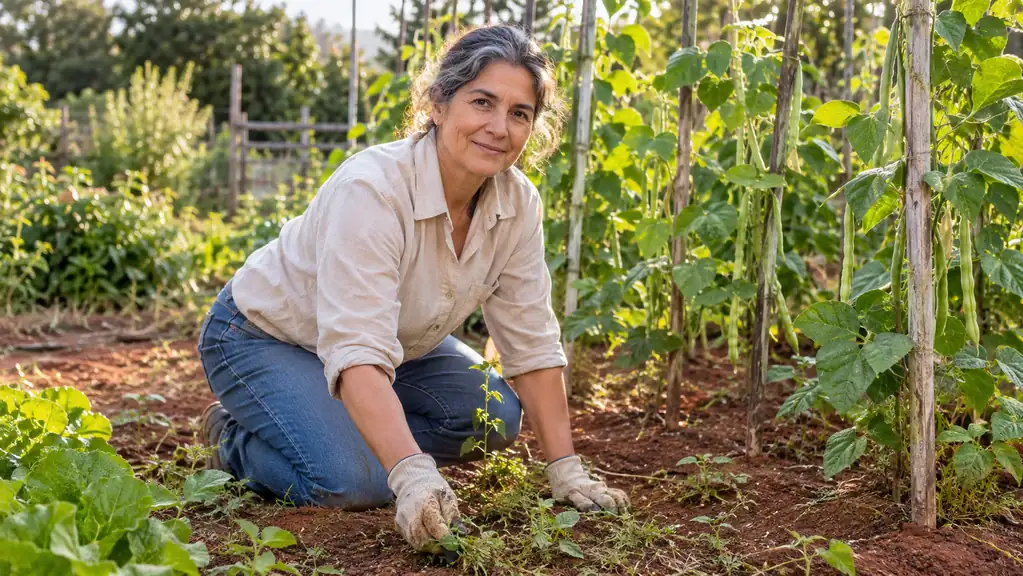
By June of 2025 I had bent the neck of a second hardware-store trowel in the same red Piedmont clay this backyard has been growing in since 2015. I dug it out of the bucket in the shed, held it up so Roy could see the bend in it, and told him I was finished buying trowels. A couple of weeks later a Nisaku hori hori knife came in, and I have not put a trowel in the ground since.
Two full seasons later it is still the first thing I reach for when I walk out the back door. What follows is what I found using the Nisaku NJP650 in a 20 by 12 foot in-ground plot and one raised bed on a concrete patio in Asheboro, North Carolina, from June 2025 through this November. I bought it with my own money. Nobody sent me one to try.
The Quick Verdict
Two seasons of heavy clay and the blade has not bent, the handle has not loosened, and three other tools are still sitting unused in the shed bucket. If you dig in real soil with your own hands, this earns its place on your belt.
Amazon Check Today's Price →The tool that retired a trowel, a dandelion fork, and an old kitchen knife
Nisaku NJP650. 7.25 inch stainless steel blade, one serrated edge and one straight edge, inch markings down the blade, wood handle, sheath included.
Amazon Check Today's Price on Amazon →How I've Used It
The knife hangs on a peg rack in the shed, in the faux leather sheath that came in the box. When I am working I wear the sheath on my belt. That sounds fussier than it is. I put it on with my gloves and I quit setting the tool down in the squash and losing it, which is what happened with the trowel about four times a morning.
It digs, it weeds, it transplants, and it cuts. In the in-ground plot it opens the holes for six tomato plants, Better Boy and Cherokee Purple, and it lifts the worst of the weeds out of the clay without me walking back to the shed for the fork. In the raised bed on the patio it does the small work, thinning leaf lettuce and spinach, setting green onions, chopping through a root that wandered in under the fence line. It opens bags of raised bed mix and cuts the twine I tie the pole beans up with. One tool in one hand.
I started using it in June 2025, which is late in a season to change tools. The first job was a row of pole beans that had gone shaggy with crabgrass. I stood there with it expecting to be unimpressed. Then the serrated edge went through a clump of roots in one pull, and I said something out loud that Roy pretended not to hear.
The job I did not expect it to be good at is opening things. Bags of raised bed mix, the plastic wrapped around a bale of straw, the knot in the twine when my hands are muddy. The serrated edge goes through a bag in one pass and the straight edge cuts twine clean. I have not carried a pocketknife out to the garden since.
Since then it has been out there nearly every dry morning from April through October, two years running. It comes inside in November with the rest of the tools and goes back out in April. In the winter it sits on the peg rack and does nothing, which is the correct amount of work for a garden tool in January.
What the Blade Does in Piedmont Clay
Our soil is red clay that sets up like a driveway in a dry July and turns to grease two days after a rain. A stamped trowel is the wrong tool for it. The one I broke in 2024 had a thin neck where the blade met the handle, and levering a rock out of that clay folded the neck over. The Nisaku is a 7.25 inch stainless steel blade in a wood handle, and all I can tell you is what I did with it. I levered rocks. I pried up a brick edge that had sunk two inches. After two seasons of that, the blade is still straight.
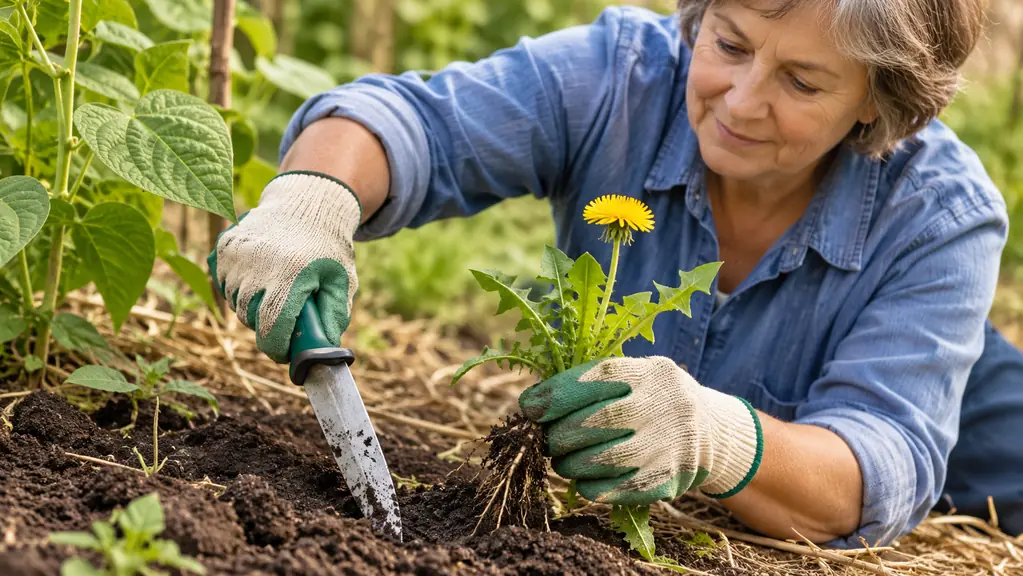
The serrated side is the one that surprised me. I had a dandelion fork for years and I fought taproots with it, digging around and prying and usually leaving six inches of root in the ground to come back in August. The serrated edge saws straight down beside the root and cuts it off. Either the root comes up with the top or it stays cut in the ground. Either way I quit fighting.
The straight edge does the slicing. Weed tops, squash runners creeping over the path, the plastic on a bag of mix, the twine on the beans. I have used the back of the blade to scrape clay off the patio after a wet week and to level the mix in the bed before setting plants into it.
There is one more piece of clay behavior worth mentioning. In February the ground is wet and heavy, and that is when I turn the plot over by hand, one fork of it at a time. The knife is not a turning tool, but it is what I use to lift the weeds that come up in the freshly turned ground, and it comes through that wet clay without loading up the way the fork does.
What it is not is a digging fork. If I have to move a shovelful of clay I go get the shovel. The knife loosens, lifts, cuts and pries at the scale of one plant at a time. Twenty minutes with it and my hand is tired. That is a hand tool for you.
The Inch Markings Earned Their Keep
There are inch markings down the blade. I did not expect to use them. I have been putting seed in this ground since 2015 and I thought I knew what a quarter inch looked like. What I actually did before was poke a hole with my finger and hope. The markings are stamped on the blade, so the blade is already in the soil, so there is nothing extra to hold or set down in the mud.
Green onions go in at about a half inch. Radishes the same. Basil barely covered at all. Now I set the blade in the ground to the mark, wiggle it to open a trench, drop the seed and pinch the soil shut. It is faster than the old way and the rows come up even. I cannot prove the harvest was better because I have never weighed a harvest in my life. I can tell you the radishes came up in a line instead of a cluster.
The same markings work the other direction. When I set a tomato plant I want the root ball deep, and I can check the depth against the blade instead of guessing with my knuckles. That is a small thing I use every single time, which is more than I can say for most features on most tools.
Two Seasons In, What Has Held Up
The handle is wood and 5.25 inches long. The whole tool weighs 10 ounces. That weight matters more than I expected. It is heavy enough to drop into clay under its own weight and light enough that my hand is not cramped after an hour. My grip is not what it was at 40, and a light tool I use for an hour beats a heavy one I put down after ten minutes.
The only maintenance I have done is to run a file along the straight edge one time, this past spring, after a winter in the shed. The wooden handle has not split and the blade has not come loose. I have not cut myself with it, which for a tool that rides on my belt is either luck or a sign that the sheath does its job.
The faux leather sheath has held up through two winters in an unheated shed. It is not leather and it does not pretend to be. The listing suggests hanging the tool on a peg rack, which sounds like nothing until you have hunted for a tool in a shed in the dark with a flashlight clamped in your teeth.
What has not held up is my opinion of every other trowel I have owned. The bent one is still in the bucket. I look at it sometimes. It is a reminder that the tool was not the problem, the soil was, and I kept buying the same tool for it.
What It Replaced and What It Did Not
It replaced three things. The stamped trowel with the bent neck is in the bucket and stays there. The dandelion fork went unused after the first month. The old kitchen knife I kept outside for cutting twine went back in the kitchen drawer where it belonged. Three tools off my belt and out of my hands.
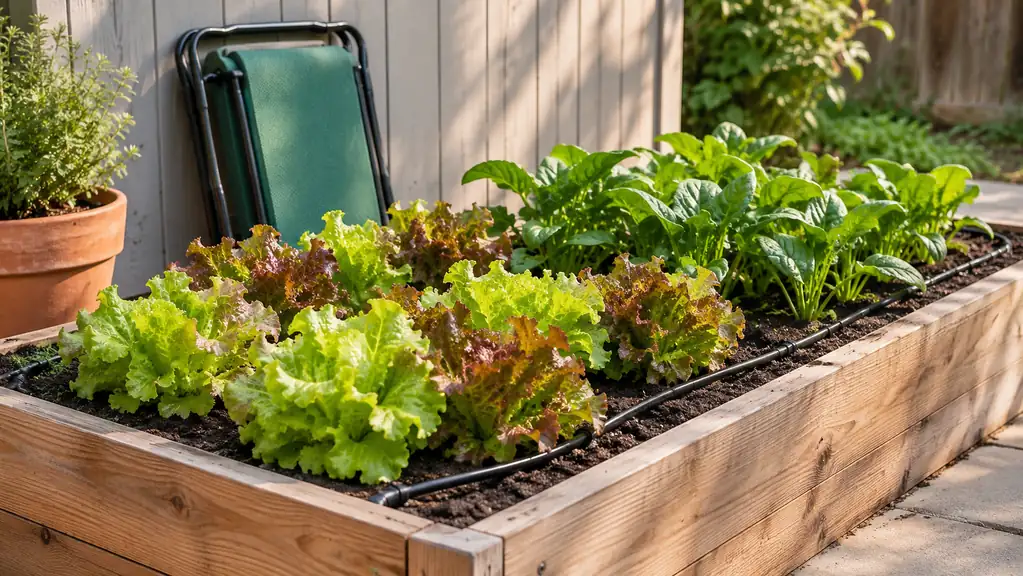
It did not replace the kneeler. My knees are what they are, the right one worse than the left, and low work in the in-ground plot still means the TomCare flipped to the pad side to kneel, or flipped to the seat to pick squash and low beans. A hand tool does not get me down to the ground or back up again. Anybody who tells you a tool fixes your back is selling you something.
It did not replace the drip kit or the fertilizer either. The MIXC line runs to both the plot and the raised bed, and I turn the spigot on by hand for about 25 minutes in the summer and turn it off again. The Tomato-tone goes on the tomatoes and peppers every two weeks per the bag. The Nisaku's job is the ground itself, and it does that job and stops.
What I Liked
- Serrated edge cuts dandelion taproots instead of prying at them
- 7.25 inch stainless steel blade has not bent in two seasons of red clay
- Inch markings on the blade mean no ruler at planting time
- 10 ounces with a wood handle, comfortable for an hour of steady work
- Cuts twine and opens bags, so three other tools stayed in the shed
Where It Falls Short
- Does nothing for sore knees, the kneeler still does that job
- The serrated edge picks up clay and needs a wipe before it goes back in the sheath
- The sheath is faux leather, not leather
- It is a hand tool, so a shovelful of clay is still shovel work
Two seasons, one pass with a file, and it still cuts twine and dandelion roots on the same morning.
Who This Is For
If you dig in heavy soil with your own hands and you have bent a trowel or two, this is the tool. It suits a raised bed as well as a plot. The bed on my patio is 72 by 24 by 30 inches and the small work in it, thinning lettuce and setting onions, is exactly the scale this knife is built for. In the plot it handles tomato holes, weed roots and twine. It also suits anybody whose hands are not what they were, because 10 ounces and a short handle are easier on a bad wrist than a long trowel with a thick grip.
It suits the gardener who is tired of carrying five things out and five things back. I go out with the knife on my belt, and the kneeler if I am working low, and that is the whole kit. There is a lot to be said for a tool that makes the trip back to the shed unnecessary.
Who Should Skip It
If you garden in loose sandy soil and you already own a trowel you like, this will feel like a nice extra and not much else. Nothing in light ground needs a serrated edge. If your main trouble is getting down to the ground, buy the kneeler first, because the knife does not help with that at all. And if you want one tool that digs, weeds, waters and feeds, no tool does that. I own four and I use all four.
The last thing I would say is that a knife is not a shortcut. It cuts a taproot faster than a fork and it opens a planting hole faster than a trowel, but you are still on your knees in the clay doing the work. What it saves is the walk back to the shed and the replacing of a bent trowel every other year.
If your trowel has a bend in the neck, this is the replacement
Two seasons in Asheboro clay, one pass with a file, and the wood handle is still tight on the blade.
Amazon Check Today's Price on Amazon →