I fed my tomatoes with blue powder mixed in a watering can from 2019 through 2024. It worked fine. The vines grew, the fruit set, and I did not think about it again. Then in late April 2025 I stood in the co-op looking at a shelf and realized I had been doing the same thing for six seasons without once asking whether it was the right thing. I bought a bag of Espoma Tomato-tone instead. Two seasons later it is still the only tomato food in my shed, and I have paid for both packs myself.
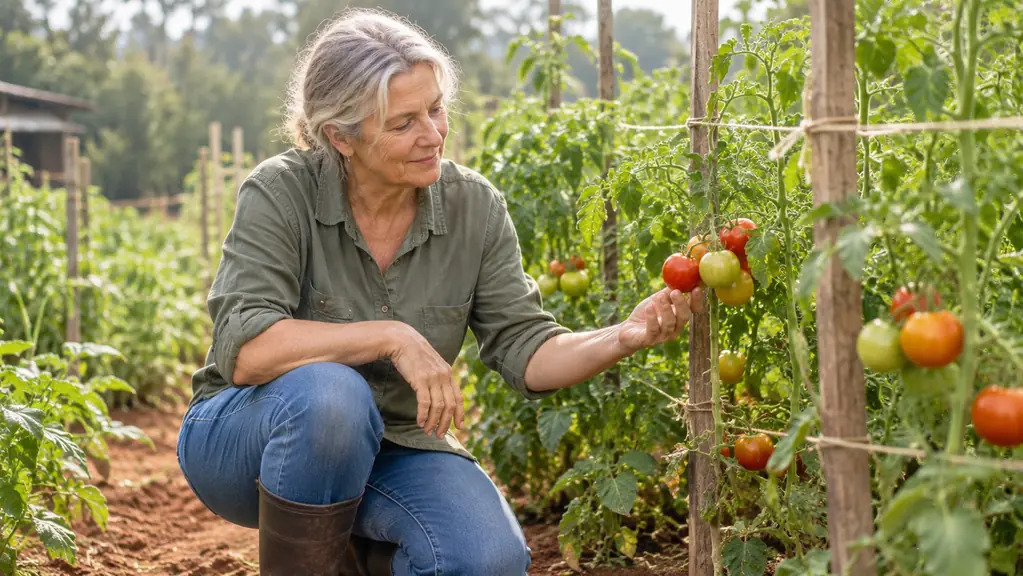
None of this is laboratory anything. I have never tested my soil, never weighed a tomato, never kept a notebook. What I have is a 20 by 12 foot plot in red Piedmont clay that I have gardened since 2015, six tomato plants in it every year, and a good memory for what a plant looks like in August. That is the whole basis for what follows.
The one bag I buy every spring without debating it
Espoma Tomato-tone, 3-4-6 with 8 percent calcium. Two seasons in my own plot, six plants and a row of peppers, and I have not gone back to mixing powder in a can.
Amazon Check today's price on Amazon →It goes in the ground the same day the plants do
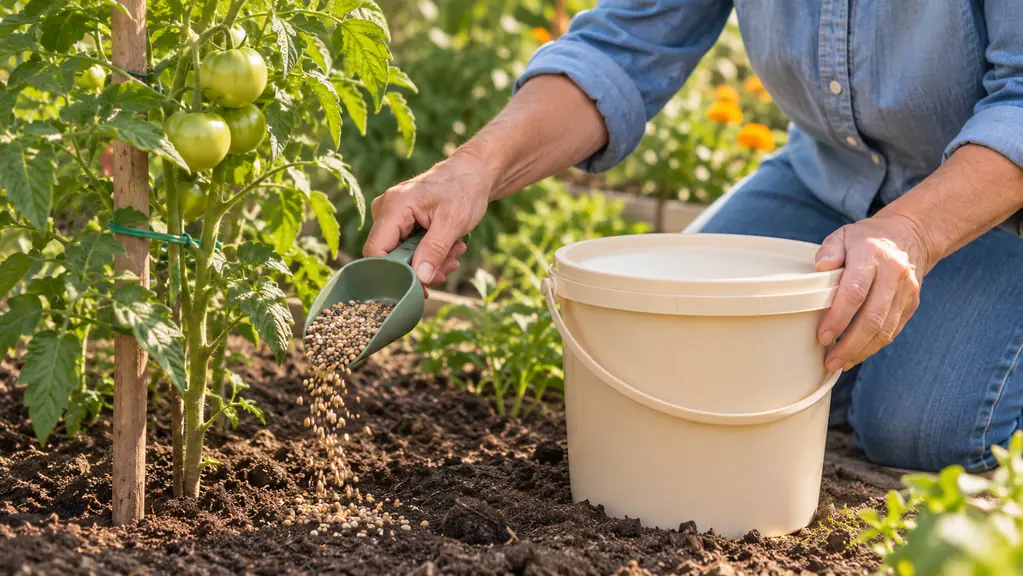
My six tomatoes go in during the last week of April, once the frost risk is past. The bag says to feed every two weeks through the growing season, so I start on planting day. I work a little into the soil around each root ball before I firm the plant in and water it. Starting on day one means I am not chasing a problem in July. In 2024 I waited until the plants looked like they needed something. In 2025 I did not have that scrambling feeling once.
One bag covers my hybrid and my heirloom without a second plan
My six plants are four Better Boy and two Cherokee Purple. One is a hybrid and one is an heirloom, and they do not grow alike. The Better Boy sets earlier and heavier. The Cherokee Purple is slower, and the fruit is bigger and softer. The Espoma bag says it is for all types of tomatoes, heirloom and hybrid, and I have not had to buy two products to keep both rows happy. Same scoop, same two-week walk, both kinds.
There is nothing to mix, which is why I actually keep up with it
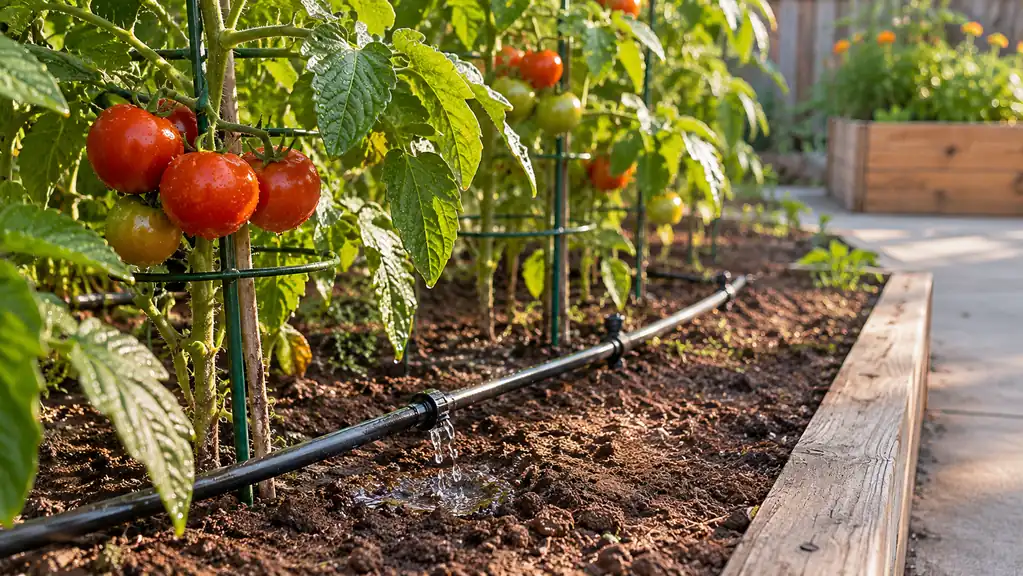
Mixing is the step that gets skipped. With the watering can I needed the can, the water, and ten minutes of standing there while it dissolved. Now I carry the bag down the row, put it around each plant the way the directions say, and turn the spigot on. The drip line takes it from there. I am not standing in the plot holding anything. That alone is why the schedule held for two full seasons instead of fizzling out by June.
The 8 percent calcium is what made me pick it up
What sent me looking was dark, sunken rot on the bottom of a few tomatoes. If you grow tomatoes in the South you have met it. The bag lists 3-4-6 with 8 percent calcium, and calcium is what everybody in the co-op line brings up when that rot comes around. I am not going to tell you it cured anything. I have not run a test and I do not know what else was different that year. What I will tell you is I picked fewer of those tomatoes in 2025 and 2026 than I had before. Two seasons is not proof. It was enough for me to buy the second bag.
It comes on slow, which is how a tomato season actually runs
The first summer I kept waiting to see something happen. Nothing did for a while. Around the sixth week I noticed the plants were less ragged, not taller, just less worn at the edges. A season here runs from late April to first frost in late October, and a feed that arrives slowly fits that better than a jolt does. If you want to see a change by the weekend, this is the wrong bag for you and I would rather say so now.
Every two weeks is a schedule I can hold onto
The directions say every two weeks through the growing season, and I tied that to the watering I already do instead of building a new habit around it. Every other Monday morning I take the bucket down the row and get on with my day. Two seasons and I have not missed a feeding. A schedule you can keep beats a better schedule you cannot, and I have proved that to myself more than once with other things around this house.
One bag a season, so the two-pack covered two years
The bags are four pounds each and come in a pack of two. Six tomato plants plus the peppers in the next row take one bag a season. So the pack I bought in late April 2025 was still half full when 2026 started, and I did not think about tomato food again until this past spring. It lives in a lidded bucket in the shed so it stays dry between uses. That is the entire storage system and it has been sufficient.
The peppers in the same row get fed on the same lap
The label covers tomatoes and vegetables, and I have bell peppers in the row beside the tomatoes. They get the same treatment on the same walk, at the same two-week interval. I never bought a separate pepper food and I do not plan to. One bag, one bucket, one lap around the plot before the heat gets up. If you are the sort who ends up with six half-used products in the shed, this cuts that down to one.
It is approved for organic gardening, if that matters to you
The bag says it is approved for organic gardening and registered as an Organic Input Material. I am not going to pretend I garden to a certification. I garden because a tomato warm off the vine in July tastes like nothing you can buy. But I read labels now in a way I did not in 2019, and it is a small comfort to know what is going into the ground under something I am going to eat standing right there in the row.
The vines hold their color into August
August is when the plot tells the truth. By then the heat has been on for two months and the clay has baked hard, and the plants either hold their color or they go thin and pale. In my two seasons with Espoma, mine held. That is the whole of what I can tell you, and it is the reason I picked up the second bag without standing in the aisle thinking about it.
What I'd Skip
I skip anything that adds a step I will not do in July. That means no second liquid feed on top of this one, no feeding more often than the bag says to, and no shelf of bottles for different crops. I also skip feeding everything in sight. The raised bed on the patio holds lettuce, spinach, radishes, green onions, basil and parsley, and none of those want a tomato schedule. The bush beans in that bed get a light feeding and that is the end of it. Tomatoes stay in the ground plot. They have never grown in the raised bed and they are not going to. One product, one row, one two-week walk with a bucket, and the rest of the season is just watering and picking.
Two seasons, one bag a year, six plants, and I picked fewer rotted tomatoes. That is not proof. It was enough for me to buy the second bag.
The only tomato food I have bought twice
Espoma Tomato-tone, four pound bags in a pack of two. Feed at planting, then every two weeks, and get on with your summer.
Amazon Check today's price on Amazon →