
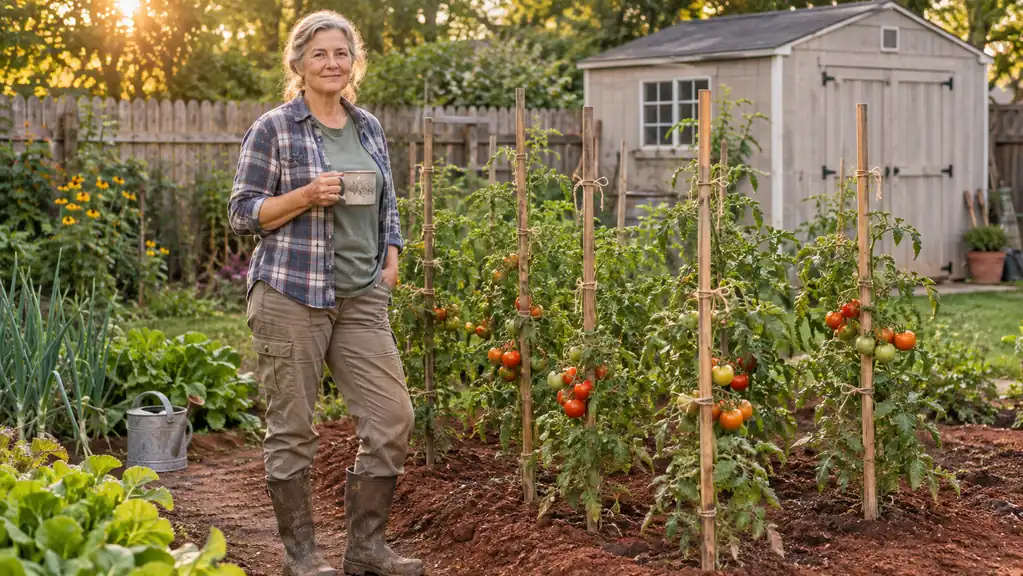
I gardened in the red Piedmont clay behind this house for ten years before I grew a tomato worth carrying into the kitchen. Not a big one. Not a pretty one. Just one that tasted like something. It came off a Better Boy in the summer of 2025, and the only thing I did different that year was change what I fed them. The fertilizer was Espoma Tomato-tone, and I want to be careful with that, because I am not the person who tells you a bag of powder changed her life.
From 2019 through 2024 I mixed blue water-soluble plant food in a watering can every couple of weeks and poured it on. It was cheap, it was easy, and I am not going to sit here and tell you it hurt anything, because I don't know that it did. The plants grew. They got tall and leafy and green and I was proud of them. What they did not do was set much fruit, and the fruit they did set had those dark rotted spots on the bottom that you find when you go out to pick. I'd cut them off, throw them over the fence, and tell myself it was the weather.
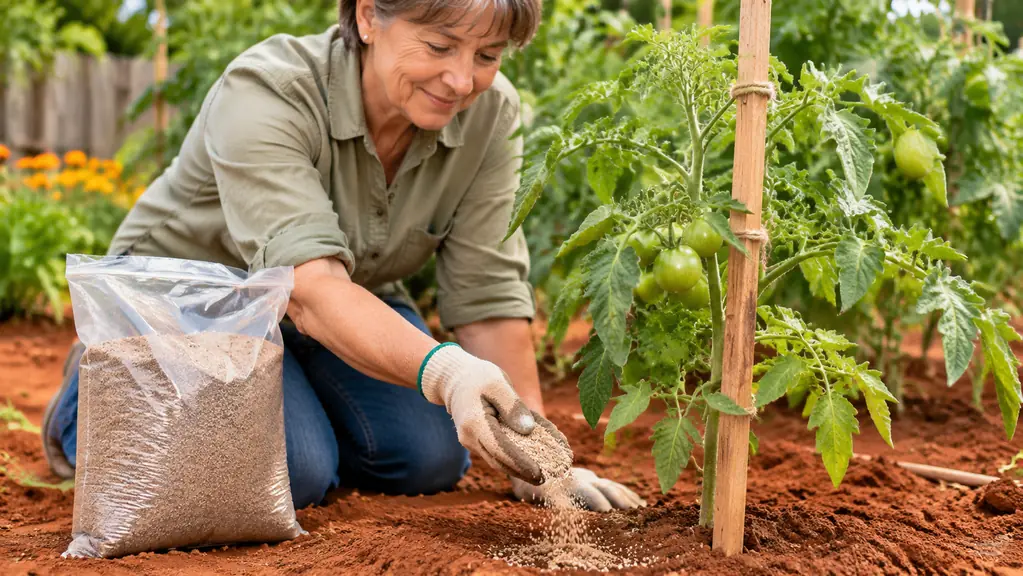
So in late April of 2025, when I set out six plants, I did it different. Four Better Boy and two Cherokee Purple, same spot, same clay, same me with a bad right knee. I bought the Espoma because the bag listed 8 percent calcium and the bottom rot was the thing I most wanted to stop. It came as a pack of two 4 pound bags. I figured if it didn't work I'd have spent one season finding out.
Here is the whole of what I do. The bag says every two weeks through the growing season, so that is what I do, and I follow the bag. I am not going to give you a spoon count because I don't keep one, and if I made one up you would be able to tell the first time your plants disagreed with me. I scratch it into the top of the soil around each plant and water it in. One 4 pound bag took those six plants and the peppers through the whole 2025 season. The pack of two covered 2025 and this past summer both. It lives in a lidded bucket in the shed and for about a day after I use it the shed smells like a barnyard. That is the honest trade.
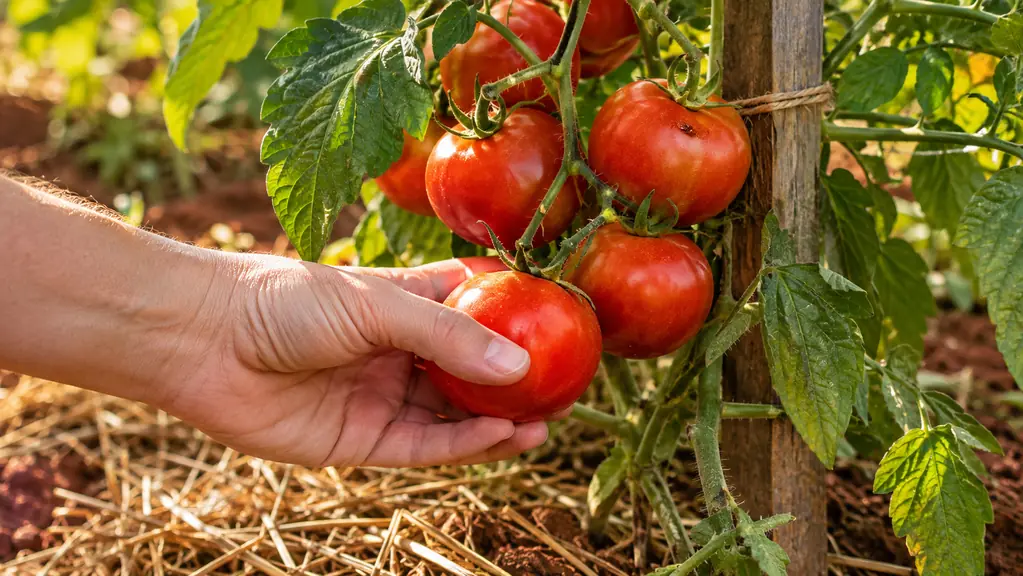
I did not notice anything the first week. Or the third. Somewhere around the sixth week I stood out there with my coffee and thought the plants looked different, and it took me a minute to say how. Steadier is the word I landed on. The leaves were darker, but not the fat soft dark green the blue water gave them. The plants held their shape through the heat. And when the fruit came on, I was picking tomatoes off the bottom of the vine that were clean on the blossom end. Not every one. Most of them. That is the whole of my evidence and I know exactly how much it is worth.
One thing I have to own up to. The drip line went in that same May, so I cannot hand all of it to a bag of powder, and the weather is never the same two years running. What I can tell you is that I fed the same six plants the same way this past summer and got the same steady plants and the same clean bottoms, and the year before I switched I did not. Two seasons is not a study. It is two seasons. But they were two seasons in my own dirt, and that is the only dirt I have to go on.
I was picking tomatoes off the bottom of the vine that were clean on the blossom end. Not every one. Most of them.
The one bag I buy every April, and the only fertilizer I have bought since 2025
Espoma Tomato-tone, a 3-4-6 organic plant food with 8 percent calcium, in 4 pound bags sold as a pack of two. One bag per season on six plants. Check today's price on Amazon.
Amazon Check Today's Price on Amazon →Where I use it and where I don't. The six tomatoes in the plot and the bell peppers beside them get the feeding. That is it for the heavy work. The raised bed on the patio does not grow tomatoes, ever. It grows lettuce, spinach, radishes, green onions, bush beans, basil and parsley. The only thing in that bed that gets any of this at all is the bush beans, and they get a light pass. Everything else in there is happier left alone, and I would rather underfeed a thing I am going to eat raw than push a pile of leaf.
None of it is heavy work, which matters at my age and with the way my knees have gone. The kneeler lives folded in the shed and I carry it out and kneel on the pad to set the plants, then flip it and sit on the bench to pick the low beans. My right knee is the worse one and I feel the difference on the days I forget it. The feeding itself is a scoop, a scratch in the dirt, and about ten minutes, and then I stand up and go turn the spigot on for twenty five minutes and go back inside.
I have not bought fertilizer since the spring of 2025. I am not going to do the arithmetic out loud because I never keep receipts, but I know what I used to lay out on the blue powder every year and I know what I have laid out since, and the since number is one purchase. One bag goes on the six tomatoes and the peppers and lasts the season. The second bag waits in the bucket until the next April.
If you want to see a plant change by the weekend, this will disappoint you. It is slow. Six weeks slow, in my ground, anyway. And if you are the kind of gardener who likes to fiddle and measure and adjust, a dry feeding you put down every two weeks is going to feel like nothing to do at all. I like it for exactly that reason. I put it down, I forget it, and I go back to the things I can see with my own eyes.
The other thing I'd say is that a fertilizer is not a fix for a garden. My clay is still clay. I still have to stake, still have to pick, still have to drag the hose around for washing up. What changed is that one job on the list stopped being a question. I don't stand out there in April wondering what to feed them anymore. I scratch in the same thing I scratched in last year and I go on to the next job.
What I'd Tell You If We Were Sitting at My Kitchen Table
Roy doesn't garden. He helped me lift the raised bed onto the patio and that was the end of his involvement, so take this as one person's account and not a family verdict. If you put a cup of coffee in front of me and asked me straight whether to buy it, I'd say this. If your tomatoes are setting fruit and the bottoms are going dark, try the calcium, follow the bag, and give it six weeks before you decide anything. Don't change three things at once the way I did with the drip line, because then you won't know what did it. And keep it in something with a lid, because it will tell you it is in the shed. That is the whole of my advice. It is not a system. It is one bag I buy every spring.
One bag in April, a lot less guessing by July
Espoma Tomato-tone, 3-4-6 with 8 percent calcium, 4 pound bags in a pack of two. The label says every two weeks through the growing season.
Amazon Check Today's Price on Amazon →