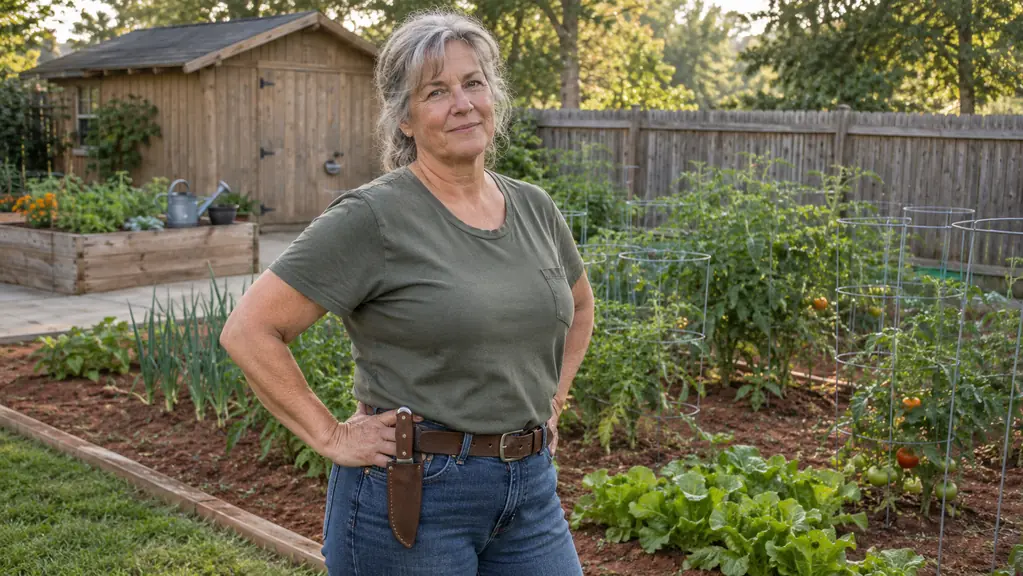
The first thing nobody tells you about the Nisaku NJP650 hori hori is that it will not turn bad soil into good soil. I bought mine in June 2025, the last of five garden purchases that year, and I had already spent a spring fighting the same red Piedmont clay I have fought since 2015. My old stamped-steel trowel had bent at the neck in 2024 and was sitting in the shed bucket like a bad memory. I wanted a tool that would dig a narrow hole, cut a root, and open a bag without me walking back to the shed. The Nisaku did those things. It did not make me twenty years younger, and it did not make my knees stop hurting. That is the honest review in one paragraph.
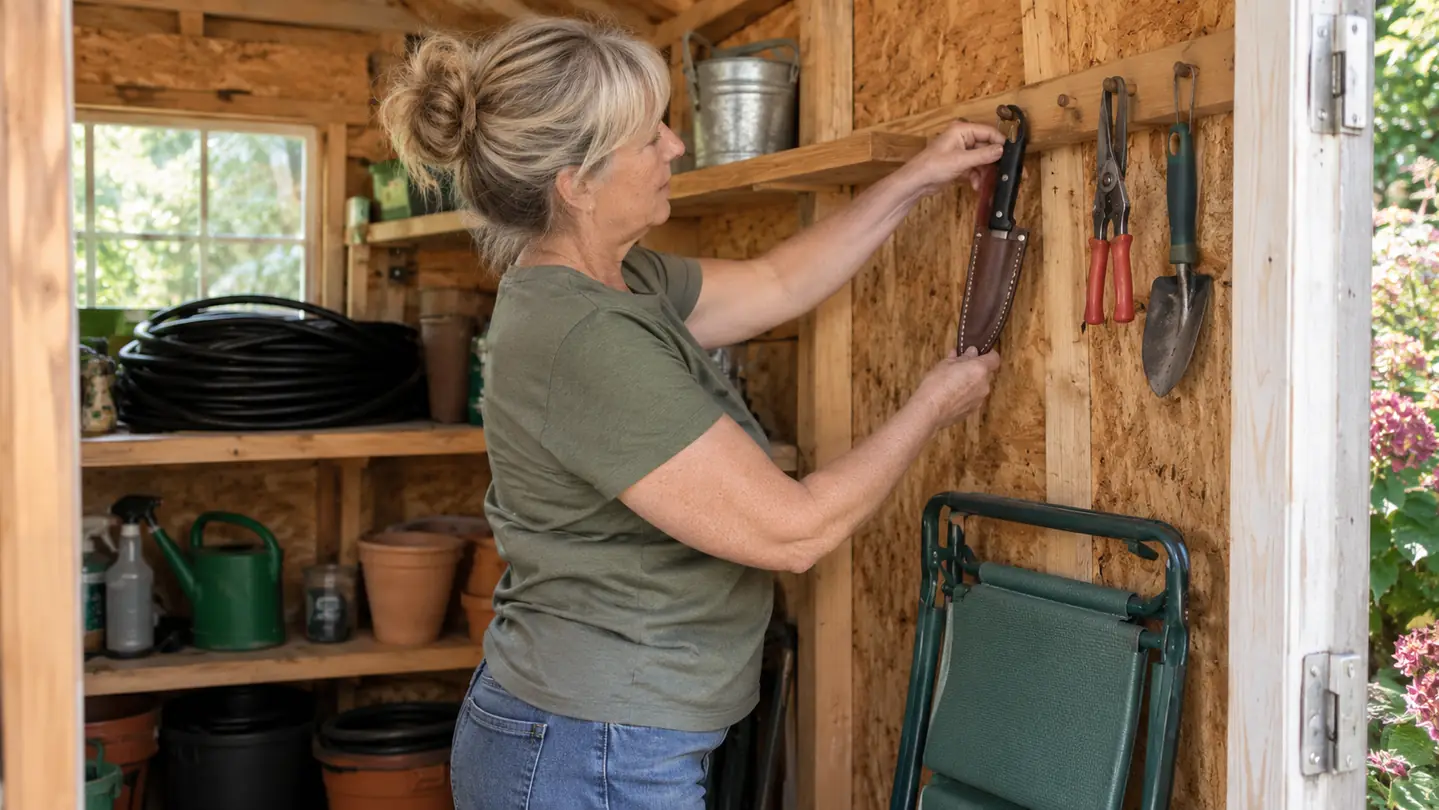
What you get is a Japanese stainless steel blade that measures 7.25 inches, a wood handle that measures 5.25 inches, and a faux leather sheath. The blade has one serrated edge and one straight edge, plus inch markings down the blade. The whole thing weighs 10 ounces. Nisaku lists a 2 year manufacturer warranty, and the tool is made in Japan. It hangs on a peg, which matters more than it sounds like it should when your shed is 8 by 10 feet and every square inch is spoken for. I keep it in the sheath on my belt while I am working and hang it on the peg rack when I am done.
The Quick Verdict
A narrow, sturdy digging knife that earned its place in my shed, as long as you do not expect it to be a shovel.
Amazon Check Today's Price →The Tool That Finally Handled My Clay
If your trowel has ever bent in heavy soil, the Nisaku hori hori is the narrow, sturdy answer I wish I had bought in 2015. It digs, cuts, and opens bags without asking for a second tool.
Amazon See the Nisaku Hori Hori on Amazon →What Nobody Tells You Before You Buy One
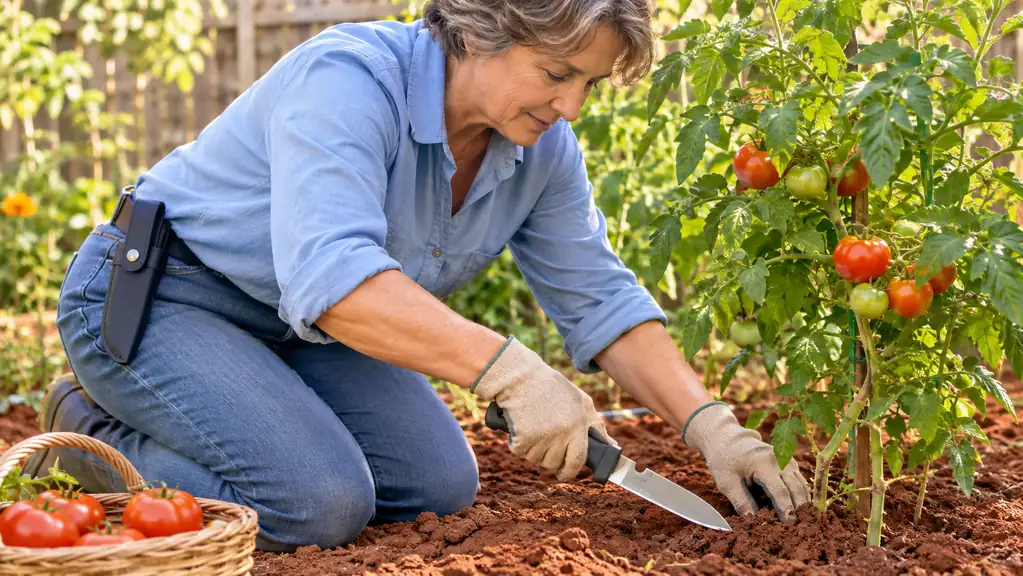
Nobody tells you that a hori hori is closer to a knife than to a trowel. That sounds obvious until you are on your knees with it. A trowel scoops. This tool cuts, pries, and slices. The blade is narrow, so it goes down between two tomato plants without shoving soil onto the stems. The serrated edge saws through a root or a piece of twine. The straight edge slices open a bag of Tomato-tone. The point makes a hole for a pepper transplant. If you are expecting to move a pile of soil, you will be disappointed. If you are expecting to get into tight places and stay there, you will wonder why you waited.
The sheath is not a holster for a fast draw. It is a plain faux leather sheath, and I wear it on my belt because I got tired of setting the knife down and then patting the ground where I thought I left it. On a hot July morning I am in and out of the sheath every few minutes. The knife goes back in without a fight as long as I pay attention. When I do not pay attention, the point catches. That is not a defect. It is a knife. I keep it sheathed when I am not using it, and I have not cut myself, but I also do not treat it like a spoon.
The handle is wood and the blade is stainless, so the tool will look used. Mine does. The handle has taken on the dirt of two seasons, and I have not oiled it or babied it. I ran a file along the straight edge once, because I use that edge on twine and bags more than I expected. I have not had a broken handle, a loose blade, or a cut. The Nisaku has held up. The wood looks like wood that has been in a garden, which is fine by me.
How I've Used It for Two Seasons
I bought the Nisaku in June 2025. That was after the TomCare kneeler in March, the Best Choice raised bed in April, the Espoma Tomato-tone in late April, and the MIXC drip kit in May. The hori hori was last, and it is the one I reach for most often. My garden is one in-ground plot, 20 by 12 feet, in red Piedmont clay, plus one raised bed on the south edge of the patio. The plot holds six tomato plants, bell peppers, squash, and pole beans. The raised bed holds leaf lettuce, spinach, radishes, green onions, bush beans, basil, and parsley. I do not grow tomatoes in the raised bed. The Nisaku works in both places.
In the plot, I use it to weed between the tomatoes and peppers. The clay gets hard in July, and a trowel wants to skate across the top. The Nisaku goes in because the blade is narrow and the point is willing. I use the serrated edge on the roots of weeds that have gotten away from me, and the straight edge to cut twine for the pole beans. I use the point to open a bag of Tomato-tone. I use the whole blade to loosen the soil around a pepper transplant so I can get it out without tearing the roots. I do not use it to turn over a whole row. That job is for a shovel, and I have a shovel.
In the raised bed, the work is smaller and the tool is almost too much. The bed is 72 by 24 by 30 inches, and I can stand at it. I use the Nisaku to loosen the top of the soil where the drip line has kept things damp, to thin radishes, and to cut a leaf of lettuce without pulling the whole plant. The shallow trough dries out fast in July, which is why the drip line runs to it, but the knife does not care about that. It is a hand tool. It does what my hand tells it to do.
After two seasons, the Nisaku is still on the peg rack in the shed when it is not on my belt. It has been dropped, wiped on my pants, and put away dirty more times than I want to admit. The blade has not loosened. The handle has not split. The sheath has a scuff or two. I have not had to replace it, and I do not expect to. That is a plain statement, not a commercial. I am hard on tools in the way that a person who gardens every year is hard on tools.
The Inch Markings, the Sheath, and the Handle
The inch markings on the blade are more useful than I expected. I do not measure every hole. I do use them when I set a transplant and want to know how deep the roots are going. I use them when I open a bag and want to know how far down the trowel has gone. I use them when I am planting green onions in the raised bed and want them at a consistent depth. The markings are on a curved blade, so you have to look at them straight on. That is a small thing. It is also the kind of small thing that keeps you from planting the same crop at three different depths.
The sheath is plain faux leather, and it does the job. It is not a piece of equipment I think about. I put it on my belt in the morning and take it off when I go in. The Nisaku hangs on the peg rack the rest of the time. The handle is wood, 5.25 inches, and it fits my hand. I have small hands and a sore right knee, and neither of those things has anything to do with the handle. The handle is not magic. It is a handle. The maker calls it ergonomic. I call it comfortable enough that I do not notice it, which is the best thing I can say about a handle.
Where It Falls Short
The first shortfall is the one I already named. It is not a shovel. I cannot move a pile of soil with it. It makes a narrow, deep hole, which is right for a tomato plant and wrong for moving any real amount of soil. I keep a full-size shovel for that. If you buy this as your only digging tool, you will be unhappy by the second weekend.
The second shortfall is the blade. It is stainless steel, and it is a knife. That means it can cut things you did not mean to cut. I have nicked a root I wanted to keep and sliced through a piece of twine that was holding a pole bean vine where I wanted it. I have not cut myself, but I am careful. I keep it in the sheath. I do not leave it lying on the ground. If you have people walking through the garden, you need to be more careful than I am. Doreen comes over with her soaker hose and does not always look down.
The third shortfall is the cost of attention. The Nisaku does not make weeding effortless. It makes weeding possible in clay that would have bent my old trowel. I still have to bend, kneel, and pull. My right knee still gets sore, and my lower back still tires. The tool is not a cure for that. It is a tool. The TomCare kneeler helps with the kneeling, and the Nisaku helps with the digging, and neither one does the other's job.
One more small thing. The handle is wood, and wood shows dirt. If you want a tool that looks new after two seasons, this is not it. If you want a tool that works and does not mind looking like it works, this is exactly it.
What I Liked
- Narrow stainless steel blade gets between plants without shoving soil onto stems
- Serrated and straight edges handle roots, twine, and bags
- Inch markings are genuinely useful at transplant time
- Wood handle and 10 ounce weight feel balanced in the hand
- Sheath and peg rack make it easy to keep track of
Where It Falls Short
- Not a shovel, so it cannot move soil or dig a wide hole
- It is a knife, so it needs the sheath and some care
- Wood handle shows dirt and does not stay looking new
- Will not fix heavy clay or replace the bending and kneeling
The Nisaku did not make me a better gardener. It made the clay less of a fight, and that is the honest claim I can make after two seasons.
What It Replaced, and What It Did Not
The Nisaku replaced three things in my shed. The first was a stamped-steel trowel that bent at the neck in the clay in 2024. That trowel is still in the shed bucket, unused. The second was a dandelion fork that I used to dig out weeds with a long taproot. The third was an old kitchen knife I kept for cutting twine. After the Nisaku came home in June 2025, I stopped reaching for all three. The trowel bent, the fork was redundant, and the kitchen knife was replaced by a better knife. I did not throw them away. I just do not use them.
It did not replace my shovel. It did not replace the TomCare kneeler, which is what I use when I need to kneel in the plot. It did not replace the MIXC drip kit, which waters the plot and the raised bed. It did not replace the Espoma Tomato-tone, which feeds the tomatoes and peppers. The Nisaku is one tool in a small set. It is the one that handles the close work. That is a narrow job, and it does it well.
Two seasons in, I can also say what it did not do. It did not keep the clay from drying into a brick. It did not keep the weeds from coming back. It did not make my right knee stop aching. It did not turn the raised bed into a no-work garden. It is a hand tool, and hand tools do not do those things. What it did do is let me work in the clay without bending a trowel every year. That is enough for me.
Who This Is For
This is for the gardener who has bent a trowel in heavy soil and is tired of it. It is for the person who weeds between plants that are too close together for a hoe. It is for the person who wants one tool to dig a narrow hole, cut a root, open a bag, and cut twine. It is for the gardener who will wear a sheath on a belt or hang the tool on a peg, because a tool you cannot find is a tool you do not use. It is for the person who understands that a hori hori is a knife, not a shovel, and wants a knife.
It is also for the gardener who likes a tool that looks like it has been used. The wood handle will darken. The blade will lose its new shine. The sheath will pick up scuffs. None of that has anything to do with how it works. If you want a tool that stays pretty, buy something else. If you want a tool that earns its keep, this is a good one.
Who Should Skip It
Skip it if you need to move soil. A shovel or a spade is the right tool for that. Skip it if you want a trowel that scoops. The Nisaku is narrow, and it is not built to carry a load of dirt. Skip it if you are not going to keep it in the sheath. It is a knife, and a knife left on the ground is a problem. Skip it if you want a tool that does everything. It does not. It does one narrow set of jobs very well, and that is the whole point.
Skip it if you garden in soft, loose soil and have never had a problem with a trowel. The Nisaku is a solution to a problem you may not have. My problem was red Piedmont clay and a bent trowel. If your soil is kind, a less expensive tool may be all you need. I am not going to tell you to buy a knife you do not need.
If Your Trowel Has Met Its Match, This Is the One I Kept
Two seasons in Asheboro clay, and the Nisaku hori hori is still on the peg rack and still on my belt when I work. It is not a shovel, and it is not magic. It is the narrow, sturdy digging knife that finally handled the close work.
Amazon See the Nisaku Hori Hori on Amazon →